
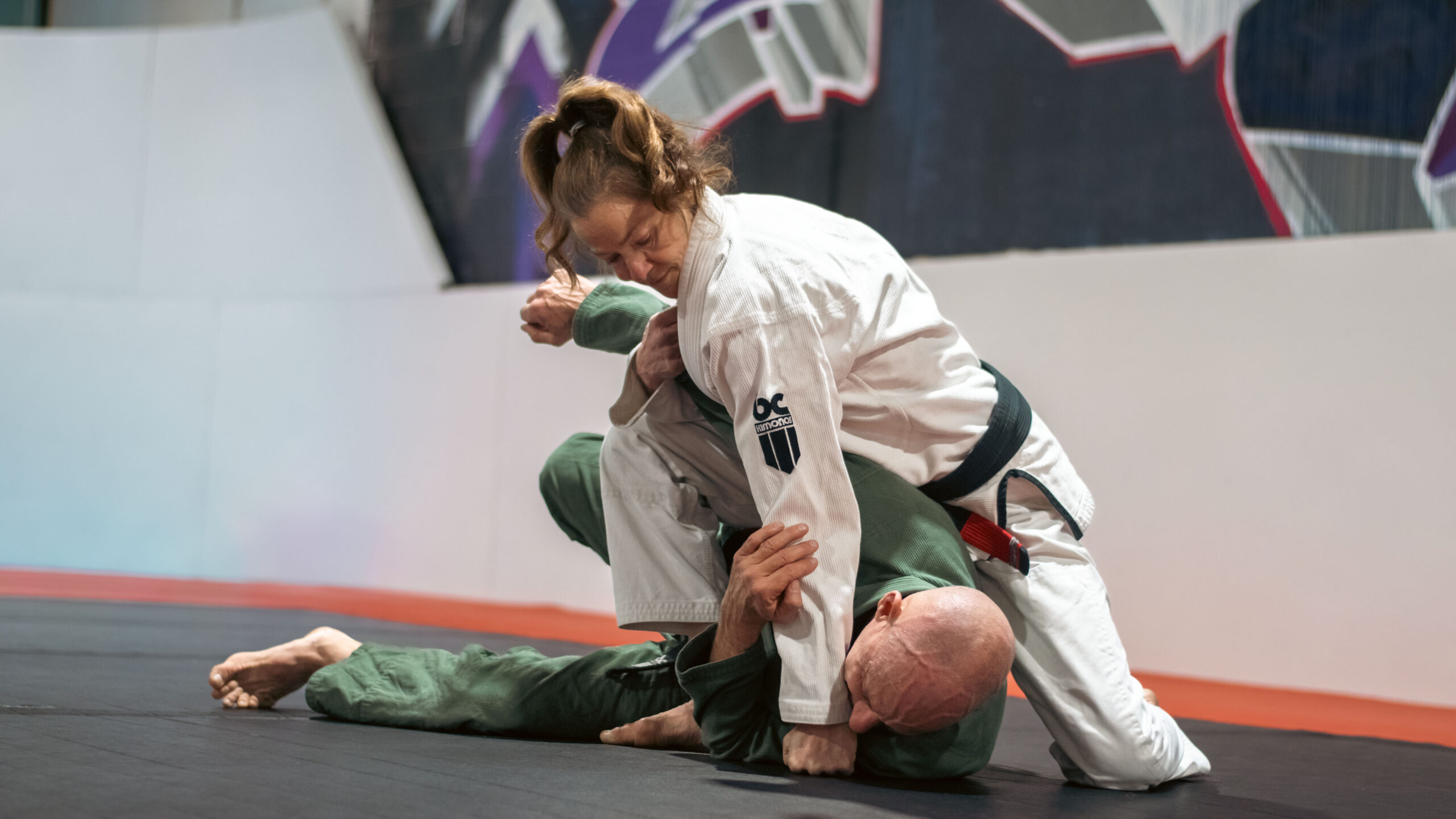
Valentine’s Day doesn’t have to be dinner and a movie. If you train Brazilian jiu-jitsu in Calgary, one of the best “date ideas” is simple: invite your partner to try a class with you.
Not because you want them to become a killer grappler overnight. But because training together builds confidence, shared routines, and a fun kind of teamwork that most couples don’t get anywhere else.
Quick answer
If you want your partner to try jiu-jitsu, keep it low-pressure: invite them to a beginner-friendly class, set expectations (it’s normal to feel awkward), focus on comfort and safety, and celebrate showing up rather than “being good.” After their first class, help them succeed by keeping intensity low, being a great training partner, and doing short, safe drills at home only if they actually want to.
Is jiu-jitsu good for couples?
Yes, for a lot of couples it is.
Jiu-jitsu works because it gives you:
- A shared challenge (you both learn something new)
- A shared routine (consistency beats motivation)
- A shared community (you meet good people)
- A healthy outlet (stress goes down, confidence goes up)
The key is doing it the right way. If you make your partner feel judged, rushed, or overwhelmed, they will not come back.
One of our students described it like this:
“Training jiu-jitsu with my spouse feels like having my strongest ally beside me on the mat — someone who knows exactly when to steady me, when to push me past my doubt, and how to celebrate every quiet victory as if it were their own.” – Stephen Asiri, SBG Calgary Student
If your partner’s on the fence because they “should just go to the gym,” this might help: BJJ vs the gym for fitness in Calgary.
The most common reason partners say “no”
It’s usually not “I hate jiu-jitsu.”
It’s one of these:
- “I don’t want to look stupid.”
- “I’m not fit enough.”
- “I don’t want to get hurt.”
- “I don’t like intense gym cultures.”
- “I don’t want you coaching me.”
So the goal isn’t to “convince” them. It’s to remove the friction.
How to invite your partner without pressuring them
Here are a few lines that actually work:
- “Want to come try one class with me? If you hate it, we never have to talk about it again.”
- “You don’t need to be in shape. The class is designed for beginners.”
- “I’ll be there, but you won’t be stuck with me the whole time. You’ll get coached properly.”
- “Let’s just treat it like a fun Valentine’s Day thing.”
Then stop talking.
If you keep selling it, it starts to feel like a trap.
Pick the right first class
For most people, the best first experience is:
- Beginner-friendly
- Structured
- Not a “competition” vibe
- Clear coaching and rules
If your gym has a fundamentals program, start there.
If you’re at Straight Blast Gym Calgary, this usually means bringing them to a Foundations class where beginners are expected and the pace is controlled.
If you’re still deciding where to go, here’s a beginner-friendly checklist on how to choose a jiu-jitsu gym in Calgary (and what red flags to avoid).
Gi or no-gi for a first class?
Either can work. Here’s the simple breakdown:
- Gi is slower and more controlled for many beginners. Grips give you more ability to “pause” and reset.
- No-gi can feel more athletic and slippery, which some people love and some people find stressful.
If your partner is nervous about intensity, gi often feels calmer.
What your partner should expect in their first class
Set expectations ahead of time.
If they’re the type who feels better knowing the plan, send them this: what to expect in your first BJJ class in Calgary.
Tell them:
- Everyone is new once. Awkward is normal.
- You will learn basics. Nobody expects you to know anything.
- Safety is the priority. Tapping is respected.
- The goal is to learn, not to win.
Also tell them what to bring:
- A water bottle
- Comfortable athletic clothes (if they are not wearing a gi)
- A good attitude and zero pressure to be perfect
The best thing you can do: don’t coach them
This is the fastest way to ruin it.
Even if you’re a higher belt. Even if you mean well.
Your partner does not want relationship energy on the mats. They want a coach.
Instead, do this:
- Let the instructor teach
- Be supportive, not instructional
- Ask them after class: “How was it?” not “Did you remember to frame?”
If they ask you a question, answer briefly. Then let it go.
How to be a great training partner as a couple
If you and your partner train together, here are the rules that keep it fun:
1) Keep intensity low
Your partner should leave class thinking, “That was challenging, but I feel safe.”
Not: “I survived.”
2) Don’t turn it into a relationship scoreboard
No keeping track of taps. No teasing. No “I got you.”
If one of you trains more, the skill gap is real. That’s normal.
We hear this a lot from couples who stick with it:
“Training with my husband is definitely strengthening our bond as we share our learnings and he teaches me new techniques. He lights up when he sees me having fun on the mats. BJJ is a life skill you can improve on together in the gym or at home.” — Angela Janusc, SBG Calgary student
And that’s the key: keep it fun, keep it safe, and focus on progress you can share.
3) Make small wins the goal
- Learn one escape
- Learn one position
- Survive one round without panicking
- Show up twice in a week
Those wins build confidence fast.
4) Don’t fix everything at once
New people can only absorb so much.
One cue is plenty:
- “Breathe.”
- “Frame here.”
- “Tap early.”
That’s it.
Safe ways to “train at home” as a couple (without getting hurt)
At-home training can be great, but only if you treat it like practice, not sparring.
Here are safe options:
Option A: Movement practice (no partner needed)
10 minutes, living room friendly:
- Shrimping (hip escape)
- Bridging
- Technical stand-up
Option B: Positional drills (slow, cooperative)
Pick one position and keep it easy.
Examples:
- Side control bottom: recover guard slowly (no crushing pressure)
- Mount bottom: bridge and trap an arm slowly
- Back control: practice hand fighting without cranking anything
Rule: No neck cranks, no hard submissions, no ego.
Option C: “Touch sparring” (light rounds)
If you really want to play:
- 2 minutes
- 20–30% intensity
- Stop the second someone feels uncomfortable
If either of you gets frustrated, end it. You’re not building champions at home. You’re building a habit.
How to support your partner even if you don’t train
Not everyone needs to train. Support matters too.
If your partner trains and you don’t, here are easy ways to help:
- Ask what they learned (and actually listen)
- Help protect their training time on the calendar
- Encourage consistency when motivation dips
- Be patient on “sore days”
- Celebrate milestones (first month, first stripe, first tournament, first time they felt calm under pressure)
That kind of support is rare and powerful.
A Valentine’s Day idea for Calgary couples
If you’re reading this around Valentine’s Day, here’s a simple plan:
- Try a class together in the morning
- Grab coffee or brunch after
- Go home feeling like you did something real together
Even if they never become a long-term student, it’s a great shared experience.
And if they do stick with it, you just found a hobby that makes both of you better.
FAQs
Yes, as long as the gym has clear safety rules and you train at an appropriate intensity. Beginners should focus on controlled drills and learning positions before hard sparring.
Keep it low-pressure. Invite them to one beginner-friendly class, explain what to expect, and reassure them that being awkward at first is normal.
No. Let the instructor coach. You can be supportive, but “partner coaching” usually creates stress and makes the experience worse.
Yes. The more experienced partner just needs to keep intensity low and focus on helping the beginner feel safe and successful.
Movement drills (shrimping, bridging, technical stand-up) and slow positional drills (guard recovery, mount escapes, back control hand-fighting) are the safest. Avoid cranking anything, especially the neck.
Want to try a BJJ class?
If you’re in Calgary and you want to try a class together, come join us at Straight Blast Gym Calgary. The best way to see if it’s a fit is to experience it in person. View our full class schedule.
Pingback: hello world
Pingback: lisinopril