
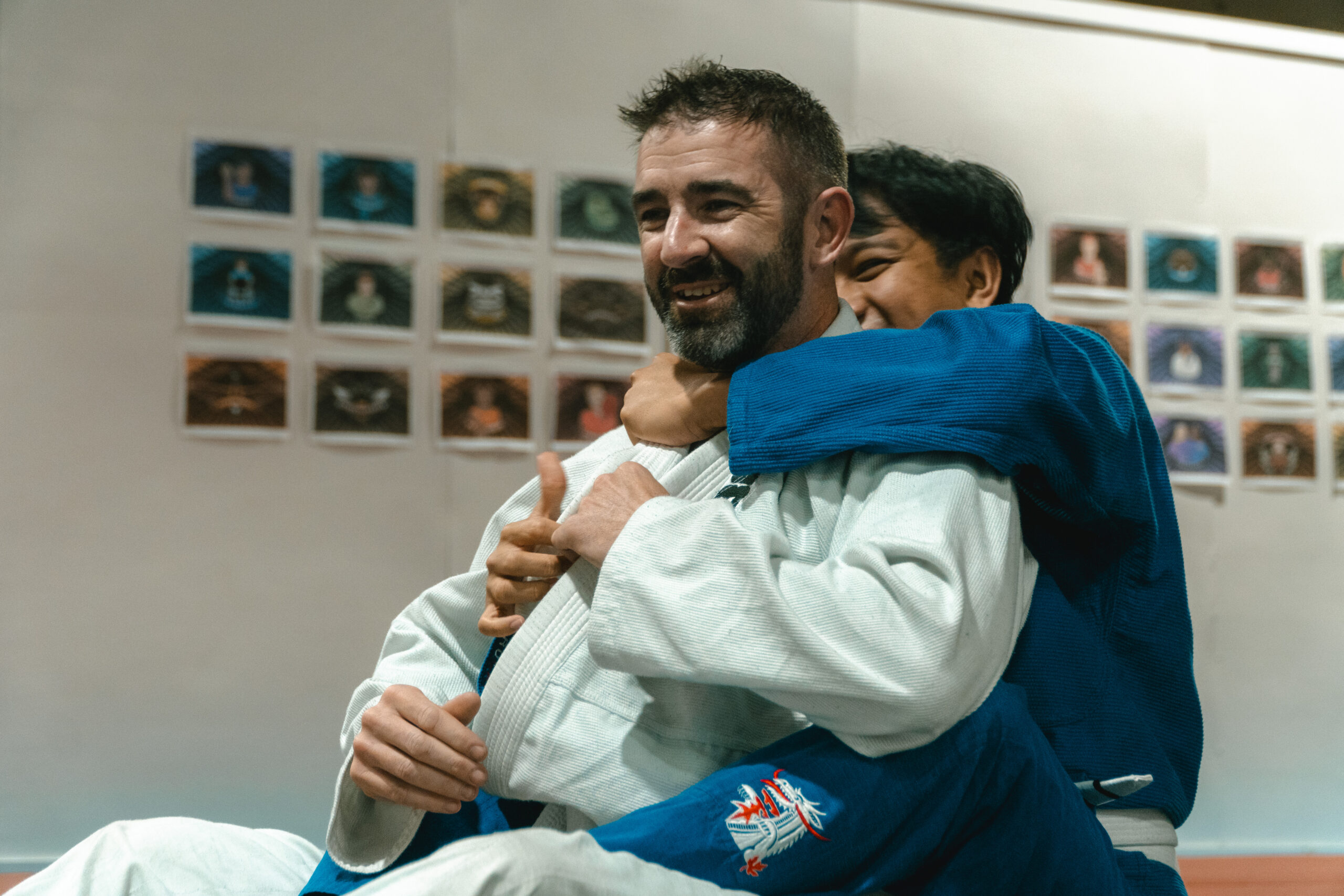
If you’re thinking about trying Brazilian jiu-jitsu, this is probably the question in the back of your mind:
“Am I going to get hurt?”
It’s a fair concern. Jiu-jitsu is a contact sport. People are grabbing, pushing, and trying to control each other. So yes, injuries can happen.
But here’s the part most people don’t hear: most BJJ injuries are predictable, and most of them are preventable with the right coaching, the right training culture, and the right pacing for beginners.
This post will give you a clear, honest answer, especially if you’re in Calgary and considering a first class.
Quick answer: Will I get hurt doing BJJ?
Most beginners do not get seriously hurt in Brazilian jiu-jitsu, but minor bumps and soreness are common. The biggest risks come from moving too fast, training too hard too soon, and ego, whether it’s yours or a partner’s. A well-run beginner program reduces risk by controlling intensity, teaching safe body positions, pairing partners appropriately, and making tapping early completely normal.
What “getting hurt” usually looks like in jiu-jitsu
When people imagine injuries, they usually picture something dramatic.
In reality, for most beginners it’s more like:
- General muscle soreness (especially the first 2–3 weeks)
- Small bruises on forearms and shins
- Mat burn (minor)
Those are annoying but normal.
The injuries we take seriously are things like:
- Strains/sprains (especially knees, shoulders, ribs)
- Tweaked fingers (from gripping the gi/uniform)
- Occasional joint issues from stubbornness around submissions
A good gym’s job is to keep you out of that second category.
The most common causes of BJJ injuries (and how to avoid them)
Here’s the truth: most injuries don’t come from “jiu-jitsu being dangerous.” They come from specific behaviours.
1) Going too hard too soon
Your first month isn’t the time to “prove” anything.
Fix: Train at a pace where you can breathe and think. For beginners, that usually means following the coach’s lesson plan: structured drilling, controlled partner work, and gradual progress at the pace we set for the class.
2) Not tapping early
There’s no medal for being stubborn.
Fix: Tap early. Tap when you’re stuck. Tap before you’re in pain. Tap if you feel something weird. Tapping is how you train for years instead of weeks.
What does “tap” mean in jiu-jitsu?
In Brazilian jiu-jitsu, “tapping” is the way you tell your partner, “Stop.” It’s a safety signal, not a sign of weakness.How to tap:
- Tap your partner 2–3 times with your hand, or tap the mat.
- If your hands are trapped, say “Tap!” clearly.
- Your partner must stop immediately and reset.
When to tap:
Tap early if you feel pain, your joint is stuck, you can’t breathe comfortably, or you feel yourself starting to panic. In jiu-jitsu, tapping is how you train safely and keep improving.This will all be explained in detail by a good coach.
3) Trying to explode out of bad positions
New people sometimes panic, then they thrash. That’s where ribs and knees can get tweaked.
Fix: Focus on learning proper posture, and how to move in stages. Calm escapes beat violent escapes.
4) Training with someone who’s careless
Most injuries involve at least one person being reckless.
Fix: A good gym pairs people properly, coaches behaviour, and removes “dangerous training partners” from the equation.
What injuries are most common in BJJ?
This varies by age and training style, but the most common issues jiu-jitsu instructors see are:
- Knee tweaks (twisting while stuck, awkward transitions and scrambles)
- Shoulder strains (posting an arm badly, forcing out of submissions)
- Rib soreness (pressure + explosive movement)
- Finger soreness (from gripping the gi/uniform too hard)
- Neck stiffness (poor posture and tension)
Notice what’s missing: “knockouts.” Jiu-jitsu isn’t a striking sport. You can still get injured, but the risk profile is very different than boxing or kickboxing.
Is BJJ safe for beginners?
It should be, if the gym is actually running a beginner-appropriate program.
Beginner safety comes down to:
- clear rules and coaching
- controlled intensity
- good partner matching
- a culture where tapping is respected
- no “trial by fire” mentality
If you’re a beginner in Calgary, the best question isn’t “Is BJJ safe?”
It’s: “Is this gym safe for beginners?”
If you’re a parent researching for your child, you might also find this helpful: Is Brazilian Jiu-Jitsu safe for kids in Calgary?
How we keep beginners safe at Straight Blast Gym Calgary
If you’re considering training in Calgary, here’s what beginner safety looks like in practice at SBG Calgary.
1) We coach the room
Beginners aren’t left to “figure it out” in chaos. The coach is watching, correcting, and controlling the pace.
2) We teach positions before we chase submissions
A lot of injuries happen when people skip fundamentals and scramble.
We focus on:
- posture
- base
- frames
- safe movement
- controlled positional escapes
When you can move safely, you can train harder later.
3) We control intensity (especially early on)
A beginner doesn’t need “hard rounds.” They need:
- reps
- confidence
- controlled resistance
- time to learn
You can still train with energy. We just don’t let it turn into a fight.
4) We match training partners appropriately
Size, experience, and temperament matter.
We do our best to pair:
- beginners with calm, controlled partners
- smaller people with partners who can move smoothly
- over-40 students with partners who don’t scramble wildly
5) We normalize tapping early
We say it constantly: tap early.
If someone acts weird about taps, they get coached. If they keep acting weird, they don’t get to train the way they want.
6) We keep it respectful
No ego. No “winning practice.” No bullying.
That’s not just culture. Safety is our first priority.
What if I’m over 40?
A lot of our students at SBG Calgary are over 40, and the question makes sense.
You can absolutely start BJJ over 40. The key is training like an adult:
- focus on consistency
- keep intensity appropriate
- prioritize sleep and recovery
- tap early, especially on joint locks
- avoid “scramble mode”
If you’re over 40, you don’t need to train like a 22-year-old competitor. You need training you can sustain.
What if I’m a woman?
Women train with us every day, and the biggest concern is usually comfort and safety, not “can I do it?”
You can.
The safety keys are the same:
- coaching
- partner selection
- controlled rounds
- clear expectations
If a gym acts like you should just “tough it out,” that’s a red flag.
How to tell if a BJJ gym is safe (a quick checklist)
If you’re comparing gyms, here’s a simple checklist on how to choose a jiu-jitsu gym in Calgary.
If you’re visiting gyms in Calgary, use this list:
Good signs:
- Coach is engaged, not just sitting on the phone
- Beginners are coached and protected
- People tap and it’s respected immediately
- Training looks controlled, not frantic
- People are friendly and helpful
Red flags:
- “We go hard every day” as a selling point
- Lots of injuries are treated like normal
- Big size mismatches with no coach intervention
- People crank submissions
- New people get thrown into full sparring right away
What should I do before my first class to reduce injury risk?
Simple steps that work:
- Show up rested and hydrated
- Trim nails (hands and feet)
- Don’t come in with a “win” mindset
- Tell the coach if you have old injuries
- Tap early and often
- Ask questions
If you want to know exactly how a first class runs, read What to expect in your first BJJ class in Calgary.
FAQs
Most people don’t get injured in their first class. Expect mild muscle soreness (as when beginning any new exercise program) and possibly a few small bruises.
Common issues include knee tweaks, shoulder strains, rib soreness, finger soreness (especially when training in the gi), and neck stiffness from poor posture.
Generally, yes. BJJ doesn’t involve head strikes, so concussion risk is much lower. Injuries tend to be strains/sprains rather than knockouts. If you’re deciding between styles, this comparison helps: BJJ vs Kickboxing for Self-Defence (Calgary).
Train at an appropriate intensity, tap early, don’t explode out of bad positions, and choose a gym that coaches beginners and matches partners properly.
Yes. Many people start over 40. The key is training smart: consistent schedule, controlled intensity, good recovery, and tapping early.
Calgary: want to try a safe, beginner-friendly class?
If you’re in Calgary and you’ve been on the fence because you don’t want to get hurt, the best next step is simple: try a properly coached beginner class and see what it’s actually like.
Book your free introductory class at Straight Blast Gym Calgary and we’ll walk you through the basics, keep it safe, and help you leave feeling confident about what to do next.
Pingback: cefixime