
What Calgary Adults 30–50 Actually Need to Know
Quick answer: Adults aged 30–50 can safely start Brazilian Jiu Jitsu at any fitness level, with beginner programs designed to build confidence, self-defence skills, and long-term consistency.
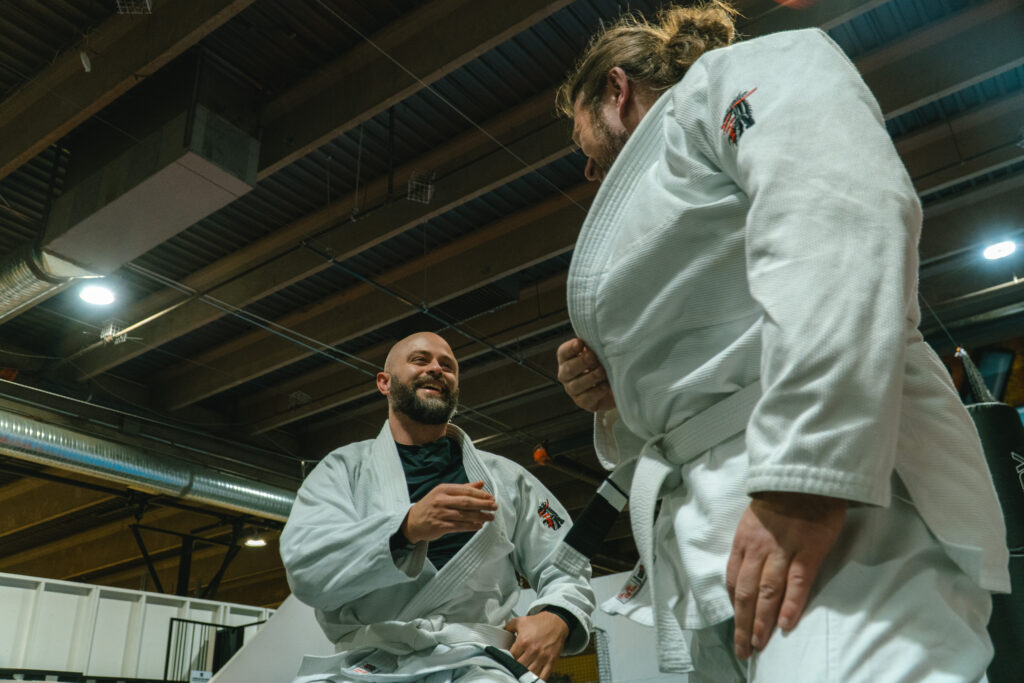
January is when a lot of adults finally decide to act on something they have been thinking about for years. Not because of a resolution, but because they want to feel stronger, more confident, and more capable in their own body.
If you’re between 30 and 50 and wondering whether Jiu Jitsu is realistic for you, you’re not alone. Most beginners have the same questions and concerns. The good news is that Brazilian Jiu Jitsu is one of the most beginner-friendly martial arts for adults when it’s taught properly.
Am I Too Old to Start Jiu Jitsu?
No. Many people begin jiu-jitsu in their 30s, 40s, and even later.
Brazilian Jiu-Jitsu relies more on leverage, timing, and decision-making than speed or raw strength. That makes it especially well-suited for adults who want a challenging but sustainable way to train.
Progress looks different at different ages, and that’s normal. Smart training, consistency, and good coaching matter far more than how young or athletic you are when you start.
Do I Need to Be in Shape Before I Start?
No. Waiting until you are “in shape” is one of the most common reasons people never begin.
Beginner jiu-jitsu programs are designed for people who are starting from scratch. You do not need cardio, flexibility, or prior training experience. Those things develop naturally as you train.
If you can walk into the gym, you can start.
Is Jiu Jitsu Safe for Adults?
When taught correctly, jiu-jitsu is very safe for adults.
Training is controlled and cooperative, not chaotic or aggressive. You learn how to how to move at an appropriate pace and how to communicate with your training partner. Beginner classes focus on learning and drilling, not proving anything.
A good program prioritizes safety, supervision, and gradual progress, especially for adults with jobs, families, and responsibilities outside the gym.
What Does a First Jiu Jitsu Class Actually Feel Like?
Most first classes are far less intimidating than people expect.
You will be welcomed, shown where to go, and guided through basic movements. Warm-ups are practical and scaled for beginners. Techniques are taught step by step, and you work with a partner in a controlled way.
You are not expected to know anything. Feeling awkward at first is normal. Everyone starts there.
Why Adults Choose Jiu Jitsu Over the Gym
Many adults come to jiu-jitsu after years of starting and stopping gym routines.
Jiu-jitsu offers something different. You are learning a skill, not just burning calories. Progress is measured by understanding, control, and confidence, not just numbers on a machine.
Training is mentally engaging, physically challenging, and social in a way that keeps people consistent over time.
Self-Defence, Confidence, and Real-World Benefits
One of the biggest reasons adults choose jiu-jitsu is self-defence.
Brazilian Jiu-Jitsu focuses on close-range situations where strength and size matter less than technique and calm decision-making. You learn how to stay composed under pressure, protect yourself, and create opportunities to disengage safely.
Confidence comes from knowing you can handle yourself, not from aggression or intimidation.
How Often Should Adults Train?
For most beginners, two classes per week is ideal.
This allows enough repetition to learn and improve without overwhelming your schedule or recovery, especially for people balancing work, family, and other commitments. Our class schedule is designed to make consistent training realistic, so jiu jitsu supports your life rather than competing with it.
What to Look for in a Beginner Jiu Jitsu Program
A good beginner program should include:
- Clear instruction designed for adults
- A welcoming, respectful culture
- No pressure to spar before you are ready
- Coaches who understand how adults learn
Programs like our Foundations Jiu Jitsu classes for adults are designed specifically to help beginners build confidence, learn safely, and progress at a sustainable pace.
Frequently Asked Questions
No. Many adults begin in their 30s and 40s. Jiu-jitsu rewards technique, patience, and consistency more than youth or athleticism.
No. Fitness develops through training. Beginner classes are designed for people starting from zero.
Injury risk is low when training is controlled and properly coached. Beginners learn how to move safely and train at an appropriate pace.
Comfortable athletic clothing is fine for a trial class. Your gym will let you know when a uniform is needed.
Most adults begin to feel more confident after a few weeks of consistent training.
Starting in January
January is a natural time to begin something new, but the most important step is simply starting.
If you have been thinking about starting jiu jitsu for a while, there is no need to wait until you feel ready. Beginner programs exist for people exactly where you are now. If you would like to learn more or try a class, you can book a beginner trial when the time feels right.
With the right environment and approach, jiu-jitsu can become a sustainable, confidence-building part of your life for years to come.
Pingback: furosemide